A New Hemisphere?
Why Latin America’s Political Realignment Matters for Families, Investors, and America’s Future

Latin America is entering its most consequential geopolitical realignment since the end of the Cold War, as governments across the ideological spectrum place renewed emphasis on security, economic growth, institutional effectiveness, and strategic partnership with the United States. That may prove to be one of the defining geopolitical observations of this decade.
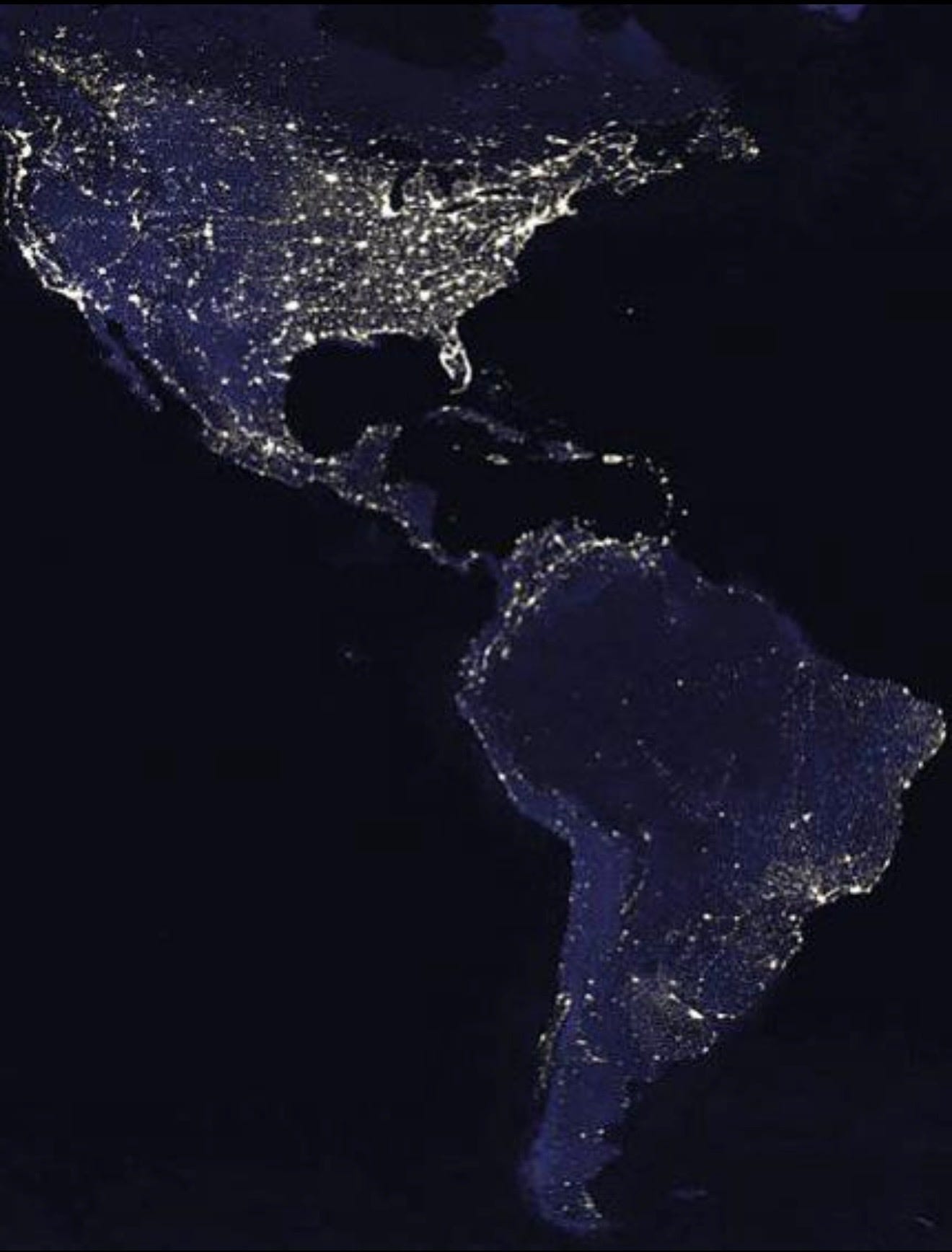
Every generation witnesses moments when political currents become something larger than elections. They become changes in national priorities, economic incentives, and strategic alliances. Across much of Latin America, voters are increasingly rewarding leaders who promise security, order, growth, and renewed confidence in markets.
The personalities differ. Their political philosophies are not identical. Some are reformers. Some are conservatives. Some are populists. Some are institutionalists. Yet together they suggest that many societies are searching for something remarkably similar: governments capable of restoring public safety, attracting investment, creating opportunity, and reconnecting their nations with the broader Western economic system.
This is not simply a political trend. It is a hemispheric realignment. For family offices, business leaders, and long-term investors, the implications could be profound.
From Ideology to Competitiveness
For much of this century, political discussion surrounding Latin America has often been framed through ideology: left versus right, socialism versus capitalism, populism versus establishment. Those distinctions still matter.
Yet a more important question is now emerging. Which governments can provide the security, stability, and confidence necessary for families and businesses to invest for decades rather than years?
Capital is remarkably patient when institutions are strong. It becomes remarkably impatient when the rule of law weakens, organized crime expands, or economic policy becomes unpredictable.
The current political movement across parts of the region appears less about ideology alone than about restoring confidence.
Citizens want safer streets. Entrepreneurs want predictable regulations. Investors want functioning institutions. Young people want reasons to build their futures at home rather than abroad. These aspirations are universal.
A Hemisphere Looking North Again
Another trend is becoming increasingly visible. Many emerging leaders recognize that prosperity in the Americas has historically depended upon close engagement with the United States.
This is not a new concept. For generations, governments throughout the hemisphere have sought strong relationships with Washington because of the benefits those partnerships can produce: expanded trade, investment, security cooperation, technological development, and diplomatic influence.
Today, that relationship may be entering a new phase. As global competition intensifies, the Western Hemisphere is becoming strategically more important. The United States is placing renewed emphasis on regional security, supply-chain resilience, critical minerals, energy independence, and nearshoring. These priorities create opportunities for Latin American countries able to provide stable investment environments and reliable commercial partnerships.
For multinational companies reconsidering global supply chains, the Americas represent more than an alternative to distant manufacturing. They represent a strategic advantage. Geography is becoming strategy again.
Security Comes First
Economic development begins with security. Without public safety, businesses hesitate to invest. Without confidence in the rule of law, entrepreneurs limit expansion. Without secure borders and effective institutions, organized crime flourishes while legitimate commerce suffers.
Across much of Latin America, voters increasingly appear to recognize this reality. Successful governments will ultimately be measured not simply by economic statistics, but by whether families feel safe opening businesses, children can walk to school without fear, and investors believe contracts will be honored.
These fundamentals matter far more than political branding. When security improves, investment follows. When investment follows, employment expands. When opportunity expands, migration pressures can diminish. That creates benefits not only for Latin America, but for the United States as well. Progress in Latin America is progress for America.
Competition in a Multipolar World
The hemisphere’s political evolution also unfolds against a broader geopolitical backdrop. Over the past two decades, China has significantly expanded its economic presence throughout Latin America through infrastructure financing, trade, lending, and investment. That engagement has reshaped regional diplomacy and given many governments alternatives to traditional Western sources of capital.
Yet many countries now appear interested in recalibrating those relationships by strengthening commercial and strategic ties with the United States. This need not become a purely zero-sum contest. Healthy nations benefit from diversified partnerships.
Nevertheless, as global competition between major powers intensifies, countries across Latin America will increasingly weigh not only economic considerations, but also questions of governance, institutional compatibility, security cooperation, transparency, and long-term strategic alignment.
For the United States, this presents both an opportunity and a responsibility. Strong partnerships cannot simply be requested. They must be earned through consistent engagement, investment, and mutual respect.
Venezuela and the Question of Stability
No discussion of hemispheric renewal can ignore Venezuela. The collapse of Venezuela under authoritarianism has produced one of the region’s greatest humanitarian, economic, and security crises. It has destabilized neighbors, contributed to mass migration, empowered illicit networks, and created a persistent geopolitical vulnerability in the heart of the Americas.
A peaceful and democratic transition in Venezuela would be one of the most consequential developments in the hemisphere. It would not solve every regional challenge. But it would remove a major source of instability, weaken malign networks, and open the possibility of rebuilding one of Latin America’s historically significant economies.
For the hemisphere to enter a true period of renewal, Venezuela cannot remain permanently trapped in repression and collapse.
The Remaining Questions
Any discussion of Latin America’s future inevitably returns to two countries: Brazil and Mexico.
They are the region’s two largest economies. Their political paths will significantly influence regional integration, trade flows, security cooperation, energy policy, and investment.
Mexico, in particular, occupies an indispensable role in North American competitiveness. A deeper partnership between the United States and Mexico on border security, organized crime, energy, manufacturing, and trade would be transformative.
The United States has made material progress in strengthening its border. But a willing, capable, and strategically aligned Mexico would change the game entirely.
Brazil remains equally important. As a continental power with vast natural resources, agricultural capacity, energy assets, and global diplomatic ambition, Brazil will help determine whether the hemisphere moves toward deeper Western alignment or continues to balance between competing global powers.
The future of the Americas will depend not only on smaller and mid-sized countries choosing reform, security, and growth. It will also depend on whether Brazil and Mexico help lead a more stable, prosperous, and integrated hemisphere.
Miami’s Defining Opportunity
Few cities are better positioned than Miami to benefit from a stronger, safer, and more prosperous hemisphere. For decades, Miami has served as Latin America’s financial, legal, entrepreneurial, and cultural gateway. It is where capital meets opportunity, where families preserve multigenerational wealth, and where ideas move freely between North America, Latin America, and Europe.
If investment accelerates across the region, demand for sophisticated legal counsel, private capital, banking, wealth management, logistics, family office services, and strategic advisory work will grow alongside it.
Miami possesses something even more valuable than geography. It possesses trust. As the hemisphere becomes more integrated, Miami’s importance is likely to increase rather than diminish.
Toward a Golden Age of the Hemisphere?
History rarely moves in straight lines. Political momentum can reverse. Economic cycles change. Unexpected crises emerge. No single election determines a generation.
Still, there are reasons for cautious optimism. A safer, more prosperous Latin America would not simply benefit Latin Americans. It would strengthen the entire hemisphere.
Greater security encourages investment. Greater investment creates opportunity. Greater opportunity reduces the forces that drive instability and migration. And stronger commercial relationships create prosperity on both sides of the equator.
For family offices, this is more than a political story. It is a long-term investment story. For businesses, it is a supply-chain story. For governments, it is a security story. And for the Americas, it may become a story of renewed partnership.
The Western Hemisphere has always possessed extraordinary advantages: abundant natural resources, entrepreneurial populations, democratic traditions, geographic proximity, and deep cultural ties.
The challenge has never been potential. It has been realizing it.
If the coming decade produces stronger institutions, greater security, renewed economic confidence, and deeper cooperation among the nations of the Americas, we may look back on this period not simply as another electoral cycle, but as the beginning of a new chapter for the hemisphere. One built less on ideology than on stability. Less on dependency than on partnership. Less on disorder than on opportunity. That would be good for Latin America. It would be good for the United States. And it would be good for generations to come.