America at 250
Liberty, Community, and the Renewal of the American Experiment

On July 4, 2026, the United States will celebrate an anniversary few republics in history have ever reached. For 250 years, the American experiment has endured through triumph and tragedy, prosperity and hardship, periods of remarkable unity and moments of profound division. Yet, as America approaches this extraordinary milestone, one would hardly know it.
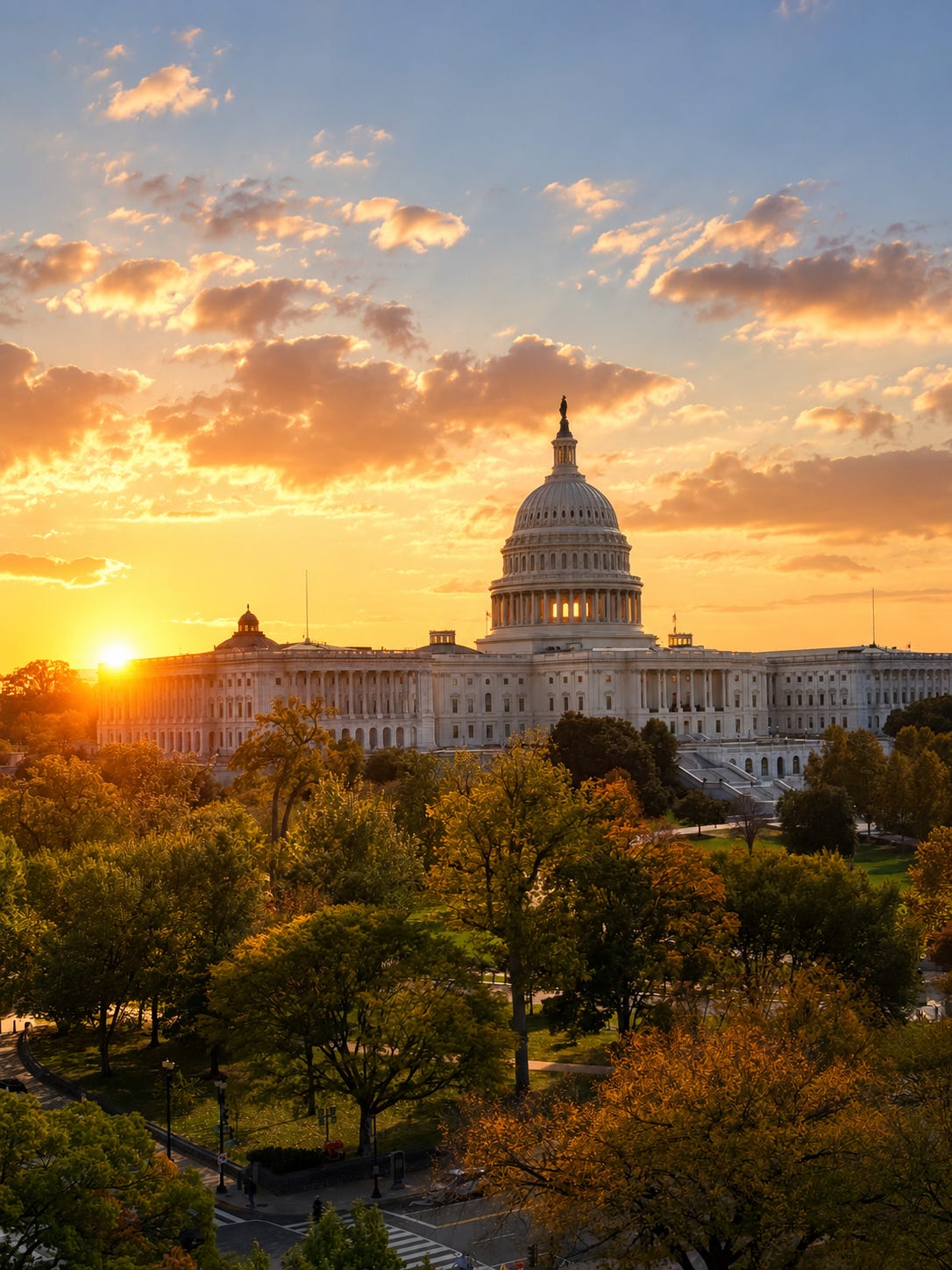
Our national conversation often feels dominated by anxiety, division, outrage, and exhaustion. Spend enough time immersed in social media or cable news and one could easily conclude that the American experiment is irreparably fractured, a republic collapsing under the weight of polarization, institutional distrust, technological disruption, and cultural fragmentation.
And yet, that is not the America I encounter each day. In conversations with entrepreneurs, educators, clergy, parents, civic leaders, immigrants, and young professionals throughout my community, I have found something very different beneath the noise: resilience, gratitude, aspiration, faith, and a continued belief that America, while imperfect and unfinished, remains one of the greatest experiments in ordered liberty the world has ever known.
This contrast has caused me to reflect deeply on what actually sustains a free society across generations. Not merely what makes nations wealthy or powerful, but what allows a republic to endure.
That question has occupied some of history’s greatest minds. John Locke articulated the principles of natural rights and liberty. Adam Smith explained the productive power of economic freedom. Edmund Burke warned that civilization depended upon institutions, continuity, and restraint. George Washington, John Adams, Thomas Jefferson, James Madison, Benjamin Franklin, and James Monroe transformed these ideas into a constitutional republic unlike any the world had seen. A generation later, Alexis de Tocqueville traveled to America seeking to understand why this democratic experiment appeared to flourish while so many others faltered. More recently, Hannah Arendt, C.S. Lewis, Viktor Frankl, and Niall Ferguson have each illuminated the enduring challenges confronting free societies.
Though separated by centuries, they were all wrestling with the same question. How does a free people remain free?
The American experiment was never founded on the assumption that liberty alone would guarantee success. The Founders were not utopian revolutionaries attempting to erase history and build society anew. They were students of history and careful observers of human nature. They understood that ambition, self interest, faction, and passion were permanent features of the human condition. Their challenge was not to eliminate them, but to build institutions capable of channeling them toward the common good.
The philosophical foundations of the republic drew heavily from Locke’s defense of natural rights, private property, religious liberty, and the consent of the governed. These principles found expression in the Declaration of Independence and established the moral foundation of the new nation.
Locke explained liberty. Adam Smith explained what liberty could produce. Too often Smith is remembered only as the father of capitalism. In truth, he was first a moral philosopher. He understood that free markets required trust, ethical conduct, and respect for others. Economic liberty was never simply about accumulating wealth. It was about unleashing human creativity, enterprise, innovation, and dignity.
America operationalized these ideas at a scale never before witnessed in history. Yet the Founders also understood something Edmund Burke recognized instinctively. Civilization is fragile. Rights require obligations. Freedom requires restraint. Prosperity requires virtue. Stable societies depend upon families, faith, civic trust, and institutions capable of transmitting wisdom across generations.
Perhaps no Founder better synthesized these realities than James Madison. He understood that constitutions should never be built upon the assumption that human beings would always exercise wisdom or restraint. As he famously observed in Federalist No. 51, “If men were angels, no government would be necessary.”
Madison’s insight remains as profound today as it was in 1788. The Constitution was designed precisely because men are not angels.
Its separation of powers, checks and balances, federalism, and independent judiciary reflected a profound humility about human nature. The Founders intentionally dispersed authority because they understood that concentrated power, regardless of who exercised it, eventually threatens liberty.
The Constitution institutionalized the intentionality of a free people determined to preserve their freedom. It transformed philosophy into governance. It transformed ideals into institutions. It transformed liberty into a durable constitutional order.
That deliberative design often frustrates us today. Technology has accelerated every aspect of modern life. Citizens understandably demand immediate action to increasingly complex challenges. As legislative consensus has become more difficult to achieve, presidents of both parties have increasingly relied upon executive authority to accomplish objectives once expected to emerge through compromise and legislation.
This trend reflects not merely executive ambition, but also public impatience. We increasingly expect immediate solutions from institutions intentionally designed to deliberate. Yet this tension reminds us of an enduring constitutional truth. The American system was never designed for speed alone. It was designed for stewardship.
The Founders believed that slowing power, requiring consensus, and balancing competing interests would ultimately produce better guardians of liberty. That constitutional architecture has endured for nearly two and a half centuries. Not without sacrifice. Not without contradiction. Not without profound failure.
The republic survived civil war, slavery, segregation, economic depression, world wars, political violence, terrorism, social upheaval, and extraordinary demographic transformation. America has repeatedly fallen short of its highest ideals. Yet the constitutional framework itself has demonstrated an extraordinary capacity for adaptation, self correction, and renewal. Perhaps no observer understood why better than Alexis de Tocqueville.
Traveling through America in the 1830s, Tocqueville expected to discover that the Constitution explained the nation’s success. Instead, he found something deeper. America’s strength did not ultimately reside in Washington. Nor did it reside solely within the Constitution itself. It resided in the habits, character, and relationships of the American people.
He encountered churches filled on Sunday mornings. Volunteer organizations. Local governments. Schools. Charities. Businesses. Neighbors solving problems together. Citizens assembling freely for purposes larger than themselves.
Tocqueville famously observed that “the health of a democratic society may be measured by the quality of functions performed by private citizens.” That insight may be even more relevant today than when it was first written. Governments create the conditions for liberty. Citizens determine whether liberty flourishes.
It is in our private capacities as parents, spouses, neighbors, teachers, entrepreneurs, clergy, volunteers, coaches, mentors, and community leaders that republics are ultimately strengthened or weakened. Virtue cannot be legislated. Character cannot be delegated. Community cannot be centralized. The work of preserving a free society belongs to all of us.
Tocqueville also believed the great historical movement of the modern age was not simply liberty, but equality. Democracy would expand opportunity and weaken inherited privilege, opening doors previously closed to millions.
Yet he also warned that equality carried its own temptations. Citizens might gradually withdraw into private lives, become increasingly isolated, and eventually exchange liberty for comfort or local responsibility for centralized administration. His warning feels remarkably contemporary.
As the son of Cuban exiles raised in Miami, I grew up surrounded by people who understood both the fragility and extraordinary promise of the American experiment. Many had experienced authoritarianism, corruption, economic collapse, or political instability firsthand. They came to America not merely seeking prosperity, but freedom, dignity, opportunity, faith, stability, and the ability to build meaningful lives through hard work, family, and enterprise.
Some of the people who most deeply appreciate the American experiment are those who have experienced what life looks like without it. America remains extraordinary because it created conditions where millions from unstable or constrained societies could build freer, more prosperous, and more meaningful lives.
Miami itself has become a living testament to that promise. Diverse, entrepreneurial, globally connected, and built largely by immigrants and their children, it reflects many of the qualities Tocqueville admired nearly two centuries ago: civic energy, aspiration, faith, enterprise, and optimism about the future.
That optimism still exists today despite the noise surrounding us. I see it in churches filled with young families searching for meaning and community. I see it in entrepreneurs continuing to build despite uncertainty. I see it in educators, coaches, clergy, and civic leaders quietly investing themselves in the next generation. I see it in parents intentionally raising children of character in a world increasingly shaped by distraction and isolation.
There have been great awakenings throughout American history. Periods of extraordinary change have often driven people back toward faith, morality, community, and shared purpose. I believe we are witnessing another.
We are living through perhaps the most transformative technological moment in human history. Artificial intelligence, biotechnology, quantum computing, automation, and exponential advances in human knowledge promise extraordinary improvements in medicine, productivity, education, and human flourishing. We should embrace these advances.
But they also compel us to ask deeper questions. What gives life meaning? What anchors identity? What binds communities together? What responsibilities accompany freedom?
Technology can connect us instantly. It cannot replace human connection. It cannot love a child. It cannot mentor a young person. It cannot comfort the grieving. It cannot cultivate virtue. It cannot teach sacrifice. It cannot replace faith, family, friendship, or community.
It is here that the warnings of more recent thinkers deserve careful consideration. Hannah Arendt observed that loneliness creates political vulnerability. Detached from family, faith, community, and meaningful relationships, people become increasingly susceptible to ideologies that promise belonging and certainty. The erosion of truth often begins with the erosion of authentic human connection.
C.S. Lewis feared modern civilization might produce men and women of extraordinary intellect but insufficient moral formation. Our capacity to build remarkable technologies means little if we lack the courage, wisdom, restraint, and virtue to govern ourselves.
Viktor Frankl understood that societies deprived of meaning inevitably drift toward cynicism, emptiness, and despair. Comfort and stimulation alone cannot satisfy the human soul. We long for purpose, belonging, duty, sacrifice, and transcendence.
Niall Ferguson reminds us that civilizations rarely collapse because they are conquered from without. More often, they weaken from within as civic participation declines, institutional trust erodes, and shared purpose fades.
These warnings should not lead us to pessimism. They should invite renewal. Because alongside these challenges I see unmistakable signs of hope.
Many people are rediscovering the importance of faith. Families remain the first school of virtue. Communities continue solving problems together. Young people appear increasingly hungry not merely for success, but for meaning.
Perhaps Tocqueville understood this better than anyone. The secret of America’s success was never simply liberty itself. It was what free people chose to build with that liberty. Families. Churches. Businesses. Schools. Charities. Communities. Lives of service. That remains our inheritance.
My optimism is rooted neither in politics nor in personalities. It is rooted in faith in people. Faith in the constitutional principles that have guided this republic for nearly two and a half centuries. Faith in the rule of law. Faith in America’s enduring capacity for renewal.
The survival of the American experiment has never depended solely upon the Constitution, its markets, or its political leaders. It has depended upon millions of free people choosing to build families, communities, institutions, and lives of meaning together.
The Constitution gave America its architecture. As its builders, generations of Its citizens gave it life.
As the Constitutional Convention concluded, Benjamin Franklin was asked what form of government had emerged from Philadelphia. His answer has echoed through American history. “A republic, if you can keep it.”
We have. Not perfectly. Not without sacrifice. Not without profound failures that demanded courage, repentance, reform, and renewal. We have preserved it because generation after generation of Americans believed the republic was worthy of their labor, their devotion, and their stewardship. Now, at two hundred and fifty years, that responsibility passes to us.
If we recommit ourselves to the principles that have sustained this nation from its beginning, to liberty under law, to faith that forms character, to families that shape future generations, to communities that strengthen civic life, to entrepreneurship that creates opportunity, and to constitutional institutions worthy of our trust, there is every reason to believe this remarkable experiment in self government will endure for another two hundred and fifty years and beyond.
America’s strength has never been perfection. Its strength has always been renewal. The work of renewal belongs to every generation. Now it belongs to ours.