The First Trillionaire
A Reflection on the Responsibilities That Accompany Extraordinary Success

Today, while sitting in Paris with my wife and children, I read an article declaring that Elon Musk could become the world’s first trillionaire following an imminent SpaceX IPO.
It struck me as a remarkable headline. Not simply because of the staggering amount of wealth involved, but because of where I happened to be reading it.
Just a day earlier, we had walked through the halls of Versailles. We stood beneath the gilded ceilings and admired the extraordinary beauty of the palace built by Louis XIV and inhabited by Louis XVI and Marie Antoinette. We discussed with our children the splendor of the French monarchy, but also the conditions that ultimately gave rise to the French Revolution.
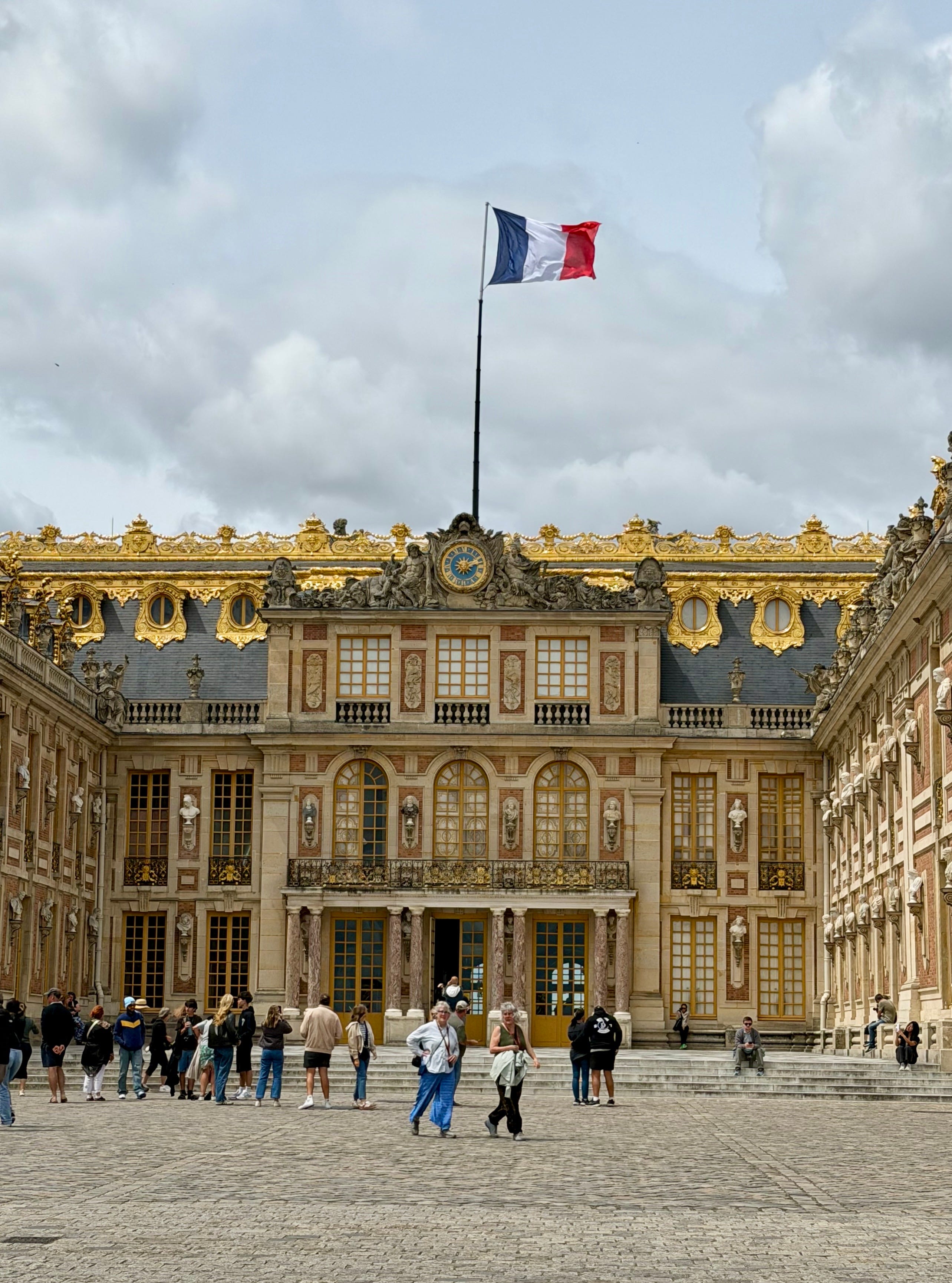
The lesson of Versailles is not that wealth is inherently wrong. France’s monarchy presided over remarkable achievements in art, architecture, culture, and statecraft. The lesson is that societies become vulnerable when those entrusted with power and privilege lose sight of the realities facing ordinary people.
As Alexis de Tocqueville observed, revolutions are often born not merely from poverty, but from rising expectations coupled with a perception that institutions have become unresponsive to the needs of the people. The tragedy of the French Revolution was not simply the fall of a monarchy, but the descent into the Reign of Terror, one of the bloodiest and most destructive periods in European history.
The warning for our own age is clear. Extreme wealth, however earned, carries with it a responsibility to remain connected to the broader society that made such success possible. The danger is not prosperity. The danger is indifference.
That distinction is important because the debate surrounding the world’s first trillionaire is not fundamentally about wealth. It is about responsibility.
The emergence of the world’s first trillionaire will undoubtedly inspire both admiration and criticism. Both perspectives deserve consideration.
Many will celebrate Elon Musk’s achievement as the ultimate expression of capitalism’s power to reward vision, innovation, and risk-taking. Musk has repeatedly wagered his fortune on ideas that many considered impossible. Electric vehicles. Reusable rockets. Global satellite internet. Artificial intelligence. Space exploration. Whether one agrees with all of his decisions or not, few can deny that he has altered the trajectory of multiple industries.
The entrepreneur does not innovate primarily out of altruism. As Jeff Bezos recently remarked when questioned about his philanthropic giving, the value created by a successful enterprise may ultimately exceed the impact of even the most generous philanthropy. Yet society benefits. New industries emerge. Jobs are created. Productivity increases. Entire ecosystems develop around transformative ideas.
This is one of capitalism’s great strengths. It creates incentives for individuals to pursue ambitious visions that ultimately improve the lives of millions and sometimes billions of people.
At the same time, many will view the rise of a trillionaire with understandable concern. How can one individual accumulate such wealth while poverty, hunger, disease, and suffering persist across the globe? What happens when advances in artificial intelligence and automation create enormous wealth for innovators while disrupting the livelihoods of workers? How large can the gap become between those creating and owning technology and those whose labor is increasingly displaced by it?
These are not unreasonable questions. In fact, they may become some of the defining questions of our generation.
As technology accelerates, society will face increasing pressure to retrain workers, expand educational opportunities, and help individuals adapt to rapidly changing economic realities. Artificial intelligence promises extraordinary gains in productivity and human capability, but it also threatens disruption for millions whose skills may no longer command the same value in the marketplace. There will undoubtedly be growing calls to tax the wealthy and redistribute resources to support those left behind by technological change. These challenges require more than economic solutions. They require moral clarity.
In his reflection, Magnifica Humanitas, Pope Leo XIV reminds us that technological progress must always serve the human person rather than the other way around. Human dignity cannot be measured solely by economic output or productivity. Every individual possesses inherent worth, and every society has an obligation to create conditions in which people can flourish, contribute, and find meaning in their work and relationships. Meaning is found not merely through economic participation, but through family, faith, community, service, and the cultivation of human gifts.
The question before us is not whether innovation should continue. It must. The question is whether we will pair technological advancement with investments in education, workforce development, strong families, vibrant communities, and institutions capable of helping people adapt and thrive.
Innovation and human dignity are not competing goals. They are complementary obligations.
History suggests we should proceed carefully before embracing simplistic solutions. The same entrepreneurial environment that creates extraordinary fortunes also creates extraordinary progress. The innovations we take for granted today, from modern medicine and air travel to smartphones and the internet, were made possible because societies allowed entrepreneurs, inventors, and investors to pursue ambitious ideas and take extraordinary risks.
The challenge is not choosing between innovation and compassion. We need both.
We should celebrate those who create value, build companies, solve problems, and expand the frontier of human possibility. At the same time, we should encourage a sense of stewardship among those who benefit most from these systems and ensure that opportunities remain available to those striving to improve their own circumstances.
Standing in Versailles, I was reminded that societies thrive when opportunity is broadly available, institutions remain strong, and citizens believe they have a meaningful stake in the future.
The lesson of the first trillionaire is not that capitalism has failed. Nor is it that capitalism has succeeded perfectly. Rather, it is that humanity has entered a new era where innovation can create wealth and impact at a scale previously unimaginable. The question before us is whether we will harness that innovation in ways that expand opportunity, strengthen communities, and preserve human dignity.
The future will not be determined by whether Elon Musk becomes a trillionaire. It will be determined by whether the prosperity generated by innovators creates a society where more people are able to flourish. If history teaches us anything, it is that free people empowered to innovate, build, adapt, serve others, and remain grounded in a sense of moral responsibility remain humanity’s greatest source of progress and hope.
As we left Versailles, my children were captivated by the grandeur of the palace and its extensive gardens. Yet I hope the lesson they carry forward is not about kings, queens, or even trillionaires. It is that every generation must find a way to balance prosperity with responsibility, innovation with human dignity, and ambition with service to others.
Those societies that succeed in doing so endure and flourish. Those that do not eventually discover a lesson as old as Versailles itself: wealth can build magnificent palaces, but it cannot by itself sustain a civilization.
Could not agree with you more Danny. We often focus on rights but fail to emphasize the many responsibilities that accompany it.
Well said, my brother! Catholic Social Justice Doctrine, when truly understood and applied as the Church teaches—and as the Holy Father recently emphasized in his latest encyclical—offers the balance you so eloquently describe.
Just as we celebrate Musk’s achievements, I also hope he continues on a path toward what I believe will be his "Saul of Tarsus" moment.
And just as France once built a wealthy and powerful kingdom, only to see it fall during the Reign of Terror, our nation is not immune to the lessons of history. The Jacobin spirit, sadly, remains alive, so we must take nothing for granted, always striving to maintain the right balance that will allow our people to flourish, not merely survive.